
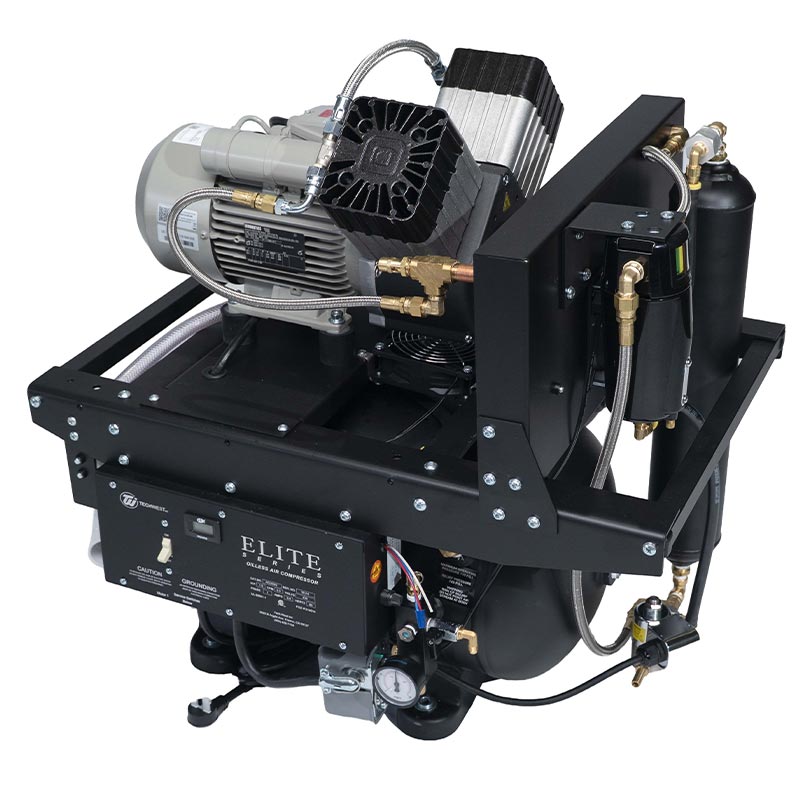
Your dental air compressor is one of the hardest-working pieces of equipment in the practice, and keeping it running reliably depends almost entirely on how well you maintain it. The good news is that a consistent, straightforward maintenance routine can add years to the life of your system and help you avoid the kind of unexpected downtime that disrupts patient care. Here is what we recommend based on more than 30 years of manufacturing dental compressor and vacuum systems right here in the United States.
Why Routine Maintenance Matters More Than You Might Think
Dental air compressors run for hours every day under steady demand. Over time, small issues like dust buildup, worn intake filters, or loose fittings can compound into bigger mechanical problems. The compressor does not usually fail all at once; it degrades gradually, and by the time you notice something is wrong, the damage may already be significant. A little attention on a regular schedule catches those small issues early, before they become expensive repairs or full replacements.
Oilless compressors, like the systems we manufacture at Tech West Vacuum, are specifically designed for dental environments because they deliver clean, dry air without the contamination risk that comes with oil-lubricated machines. But oilless does not mean maintenance-free. The components still wear, and they still need to be inspected and serviced on a consistent basis.
A Practical Maintenance Schedule to Follow
Daily and Weekly Checks
At the start of each day, take a moment to listen. A well-functioning compressor has a consistent, familiar sound. If you notice rattling, unusually frequent cycling, or extended run times, those are signals worth investigating. Once a week, check that the area around the compressor is clear of debris and has adequate ventilation. These systems generate heat during operation, and airflow around the unit matters for long-term performance.
Monthly Tasks
Every month, inspect the intake filter. This is the single most important maintenance step for an oilless dental compressor. A clogged or dirty filter forces the motor to work harder to pull in air, which accelerates wear on internal components. Most filters can be cleaned gently with compressed air or replaced outright; replacement filters are inexpensive relative to the cost of a motor repair. While you are at it, check all visible connections for any signs of moisture or air leaks.
Quarterly and Annual Service
Every few months, drain the receiver tank if your system includes one. Moisture accumulates in the tank over time, and allowing it to sit leads to corrosion from the inside out. Quarterly is also a good time to check belt tension on belt-driven components and inspect the head valves if your system design allows for it.
Once a year, schedule a more thorough inspection. Depending on the volume your practice sees, this might include replacing intake and outlet valves, checking the pressure switch calibration, and inspecting all hoses and fittings. If you work with a dental equipment service technician, this annual review is a natural point to bring them in.
Keep the Equipment Room Environment in Good Shape
The room where your compressor lives matters. High ambient temperatures shorten component life, so make sure the equipment room stays reasonably cool and well-ventilated throughout the warmer months, including August when heat can be a real factor in many parts of the country. Keep the floor and surfaces clean. Dust pulled into the intake can pass through a worn filter and accelerate internal wear faster than almost anything else.
Proper placement also plays a role. The compressor should have several inches of clearance on all sides, and it should not be stored directly against a wall where heat has nowhere to go.
Know When to Call for Support
Even with excellent maintenance habits, there comes a point where a trained eye makes the difference. If your compressor is short-cycling, running hot, producing unusual noise, or failing to hold pressure, do not keep pushing it through the day hoping the problem resolves. These symptoms usually point to something specific that can be addressed quickly if caught early.
At Tech West Vacuum, we have been manufacturing dental compressor and vacuum systems in Fresno, California for over 30 years, and we back our equipment with a strong warranty and real support. If you have questions about maintaining your system or want to know whether a repair or replacement makes more sense for your situation, please give us a call or drop us an email. We are here Monday through Friday and happy to help you get the most out of your equipment.