
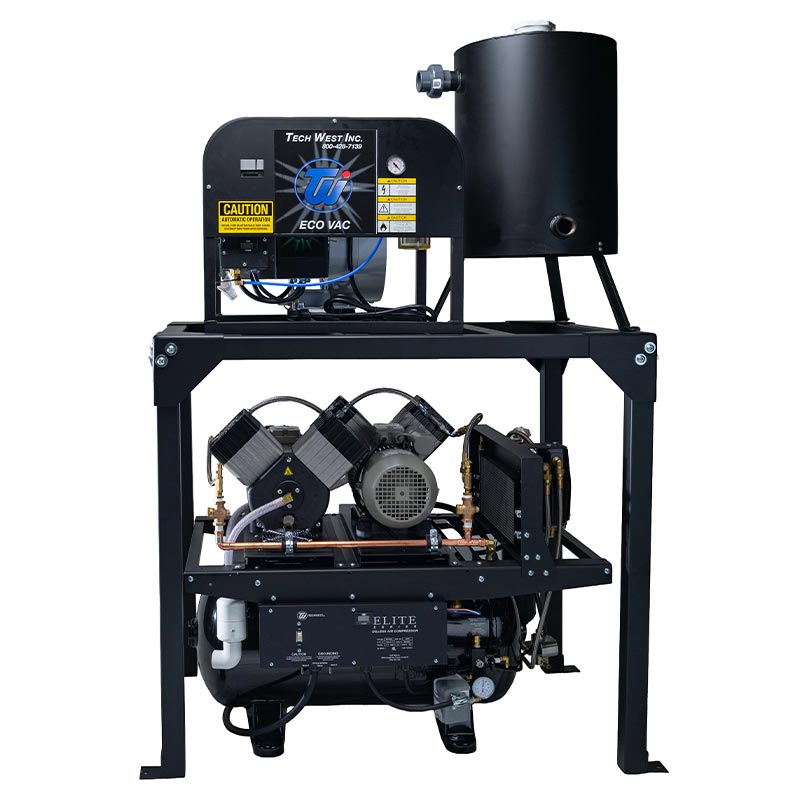
A failing dental vacuum system rarely gives out all at once. More often, it sends signals well before it quits completely, and catching those signals early can mean the difference between a quick service call and an unplanned shutdown in the middle of a patient day. After more than 30 years of manufacturing dental vacuum and compressor systems, we’ve seen the patterns. Here’s what to watch for, and what to do when something doesn’t seem right.
Loss of Suction Power
This is usually the first thing a clinical team notices. If the high-volume evacuator feels sluggish, or the saliva ejector isn’t pulling the way it used to, don’t chalk it up to a busy day. Reduced suction can point to a worn separator, a clogged inlet filter, a failing motor, or even a leak somewhere in the line. The problem tends to get worse gradually, which makes it easy to overlook until patient comfort is clearly affected.
Check your filters first. If they’re clear and suction is still weak, the issue is likely mechanical and worth a closer look from a qualified service technician.
Unusual Noises Coming From the Equipment Room
Dental vacuum units are designed to run quietly in the background. If you start hearing rattling, grinding, high-pitched whining, or a motor that labors noticeably before it settles into its cycle, those sounds aren’t normal. Grinding often suggests a bearing issue. Rattling may point to loose components. A motor that struggles to start could mean electrical wear or a capacity issue under load.
Don’t ignore sounds that weren’t there before. In our experience, noise is one of the earliest and most reliable indicators that something mechanical is on its way out.
Overheating or Frequent Cycling
A system that runs hotter than usual, or that cycles on and off more frequently than it should, is working harder than it needs to. This can be caused by a dirty intake, a worn pump assembly, inadequate ventilation in the equipment room, or a unit that’s simply undersized for the current patient load. Over time, heat accelerates wear and shortens the life of the system considerably.
Make sure your equipment room has proper airflow, and that nothing has been stacked or stored against the unit. If ventilation checks out and cycling is still erratic, call a technician.
Water in the Vacuum Lines (Wet Vacuum Systems)
For practices running a wet vacuum system, excessive water or moisture showing up where it shouldn’t is a sign the separator or trap may not be draining correctly. Left unaddressed, this can lead to contamination concerns and faster corrosion inside the system. Routine separator maintenance is straightforward, but it has to actually get done on a consistent schedule.
System Age and Deferred Maintenance
Even a well-built unit will reach a point where repairs become more frequent than they’re worth. If your system is aging and has been running without regular service, that history matters. Parts wear, seals degrade, and what was once a reliable setup can become a source of ongoing trouble.
One of the practical advantages of working with an OEM manufacturer is knowing exactly what you’re getting in a replacement. Our systems are built here in the United States, ship same-day when you need them quickly, and come backed by a solid warranty. Whether a dental practice is replacing an older unit or a distributor is sourcing reliable stock for their service region, we can help find the right fit.
What to Do When You Spot a Warning Sign
Start with a visual inspection of filters, separators, and connections. Clear anything that’s obviously clogged or loose. If the problem persists, loop in a service technician who works with dental equipment. Some issues are serviceable in the field; others point toward a system that has reached the end of its practical life.
If you’re at the point of evaluating a replacement, it’s worth thinking about capacity, room configuration, and whether a dry or wet vacuum setup makes more sense for your practice’s volume and workflow. We’re happy to talk through the options with you.
Give us a call or drop us an email if you have questions about what you’re seeing with your system. Our team is available Monday through Friday, and we’re straightforward about what we’d recommend.